
I was walking to my Tuesday banking class on the University of South Carolina campus. As I entered the Darla Moore School of Business, I could tell a major event was occurring. People were crowded around televisions. The silence was eerie. I went to class.
About halfway through the 9:00 a.m. class, someone walked briskly in and whispered a few words to our professor.
He turned to us and said, “All of you may leave, and I recommend pulling as much cash out of your bank accounts as possible.”
The plumbing of our banking system seized up that week, and only an extraordinary rescue by the Federal Reserve kept it moving. I remember the tough decision of how much to withdraw as I walked to the ATM. Should I pull out all $300? It was a lot of money to me as a 21-year-old back then.
For those close to my age, 9/11 is a clear demarcation in U.S. history. As a child, I remember the Berlin Wall falling in 1989 and the Soviet Union dissolving in 1991. We won the Cold War, and the United States became the dominant global superpower. The late 1980s and the 1990s were an unprecedented period of peace and prosperity. The biggest threat as we ushered in a new millennium was a computer glitch known as Y2K.
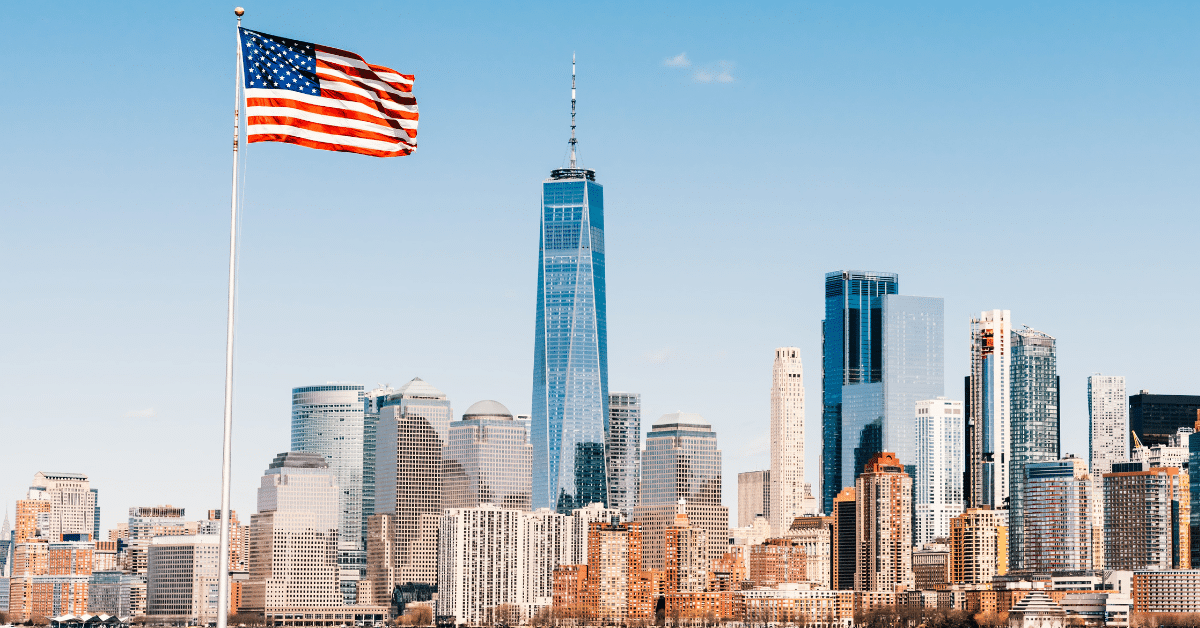
Then, out of nowhere, we suffered a terrorist attack with a higher death toll than Pearl Harbor—the deadliest attack ever carried out on the American mainland. We all watched it happen live on television. The planes. The explosions. Those who had to choose the air over fire. Then the vacant space left where two impressive towers once stood. The fires burned for weeks.
The collective illusions of safety and security vanished. Peace disappeared. For those of us who watched, the horrors of that day still haunt us. For some, like me, we were old enough to know life can be tough, yet young enough not to fully grasp the fragility of freedom. The World War II generation gave us plenty of warnings, but too few of us in the generations that followed truly understood what they meant. We found out in a moment. When the second plane hit, we knew life had been forever changed.
Most tragic were the lives lost. A total of 2,977 victims died in the September 11, 2001, terrorist attacks, excluding the 19 hijackers. New York lost 2,753. The Pentagon lost 184. Another 40 died in a field near Shanksville, Pennsylvania.
Through the chaos, courage emerged. Rick Rescorla, Morgan Stanley’s head of security, evacuated roughly 2,700 people before returning inside to search for others, ultimately dying in the collapse. Moira Smith, an NYPD officer and the first to radio in the attack, repeatedly entered the burning South Tower to lead many injured people to safety before perishing. Welles Crowther, often known as the man in the red bandana, saved at least a dozen people before dying in the South Tower. Alongside them were the firefighters, officers, and paramedics who ran toward what everyone else was fleeing.
Todd Beamer, a 32-year-old father of two (with a third on the way), was on United Airlines Flight 93. The passengers realized their plane was on a suicide mission toward Washington, D.C., with the U.S. Capitol or the White House as the probable target. Beamer and a core group of passengers chose to mount a counterattack. His famous last words became a national rallying cry and a symbol of American resilience: “Let’s roll.”
It was Beamer, along with fellow passengers such as Mark Bingham, Tom Burnett, and Jeremy Glick, who decided to charge the cockpit door with a food cart as a battering ram. Seconds from being overcome, the hijackers drove the plane into a Pennsylvania field rather than surrender it. Washington was spared. Though 40 passengers and crew tragically lost their lives, myriad other lives were saved.
As we look back 25 years later, I realize the world we lost on 9/11 is gone forever, available only in our memories. But that doesn’t mean our nation’s future is destined for darker realities. The reason we remember—the reason we never forget—is that the United States can be even better for our children and grandchildren. We are not destined to be defined by the past unless we refuse to share with the next generation how we got here.
Take a moment today to talk with your children or grandchildren about what 9/11 means. Tell them about Rescorla, Smith, Crowther, and Beamer. And tell them that our nation can be defined by our heroes, not by the past evils that instill fear.
I believe America is what John Winthrop described in a 1630 sermon, a phrase President Reagan later made famous. We are a “city upon a hill,” an exceptional beacon of freedom, hope, and opportunity. But as Winthrop warned, “The eyes of all people are upon us.” Will we live up to the virtues of our founding? Will we be the place where life, liberty, and the pursuit of happiness prevail for all?
The American people were wounded that day. Words from the prophet Isaiah come to mind. A weak reed. A flickering candle. Isaiah 42 tells us what God does with them. He does not crush them. He does not snuff them out. The Islamic terrorists responsible for 9/11 did not hijack freedom. The weak reed did not break. The courage of proud Americans stopped the terrorists from taking what we cherish most. Things are different now, yes, and forever changed. But the flickering candle is still lit. The city on a hill still shines brightly. May God’s grace light every corner of our nation.
Posted on September 11, 2026
Dr. Sam Rainer serves as president of Church Answers and as the lead pastor at West Bradenton Baptist Church in Bradenton, Florida. He writes, teaches, speaks, and consults on a variety of church health issues. Sam cohosts the popular podcast Rainer on Leadership.
Sam is the author of several books, including “The Church Revitalization Checklist,” “Understanding the Bible as a Whole,” and “The Surprising Return of the Neighborhood Church.” He has written hundreds of articles for several publications and is a frequent conference speaker on church health issues.
Sam holds a BS in finance and marketing from the University of South Carolina, an MA in missiology from Southern Seminary, and a PhD in leadership studies from Dallas Baptist University. He lives in Bradenton with his wife and four children.
More from Sam
About The Author